A Perfect Storm: Spatial Heterogeneity in the Relationships Between Natural Disasters, Social Vulnerability, Resilience, and Voter Turnout
Nov 9, 2023··
0 min read
Brugger, L., Spindler-Ruiz, P. & Sandoval, N.
Abstract
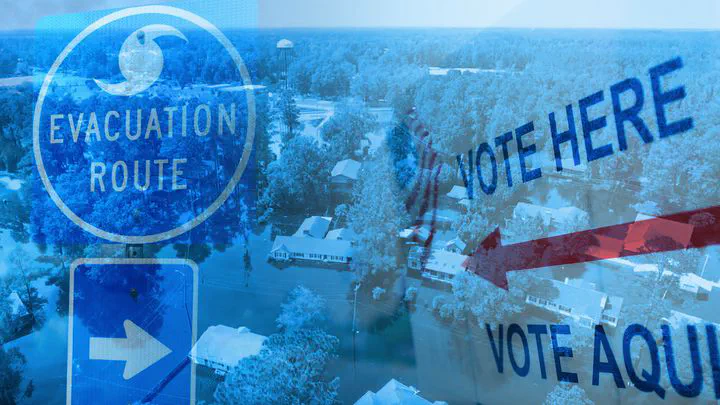
The United States has witnessed an alarming surge in billion-dollar disasters, setting a record for the
number experienced in a single year. These climate-related events, ranging from wildfires to hurricanes,
are not just increasing in frequency and cost; they disproportionately impact minority communities.
Systemic inequalities have left these communities more vulnerable to the physical and socio-economic
repercussions of natural disasters, thereby exacerbating existing disparities. This intersection of climate
events and voter suppression efforts has created a multifaceted dynamic, where vulnerable populations
not only bear the brunt of environmental challenges but also face additional hurdles in exercising their
right to vote. Although prior research acknowledges the influence of natural disasters and social
vulnerability on voting disparities, limited studies have investigated how these relationships may vary
across different geographic areas. Further, while many studies have focused on characteristics related to
vulnerability and the corresponding relationship to voter turnout, more holistic measures that encompass
broader dimensions of social vulnerability have not yet been explored. Finally, existing literature has
primarily focused on negative relationships of disasters and vulnerability on voting behavior. Limited
attention has been given to the potential mitigating role of environmental resilience. The purpose of this
study is to examine the spatial heterogeneity that may exist in the relationships between disasters, social
vulnerability, environmental resilience, and changes in voter turnout. Specifically, this study uses
geographically weighted regression to examine the following research questions: 1) To what extent were
disaster events (hurricane, tropical storm, flood, etc.) related to changes in national voter turnout between
the 2016 and 2020 Presidential Elections?; 2) How did a comprehensive measure of social vulnerability
relate to changes in national voter turnout between the 2016 and 2020 Presidential Elections?; 3) How was environmental resilience related to changes in national voter turnout between the 2016 and 2020
Presidential Elections?; and 4) What spatial heterogeneity exists in the above relationships? Using
national voter turnout data from Harvard Dataverse and American Community Survey Data, Federal
Emergency Management Agency (FEMA) disaster declaration data, the Social Vulnerability Index, and
the Building Resilient Infrastructure and Communities (BRIC) index, this study observes that spatial
heterogeneity exists in these relationships. By revealing how these relationships may vary across different
geographies, this study offers insights for policymakers seeking to safeguard voting rights amid a quickly
changing climate.
Type
Publication
In Association for Public Policy and Management Conference